The Materials Composition of Ceramics
May 2021
There are different aspects to look at if you want to study and understand ceramics. For my research, I am examining color and clay temper among the ceramic sherds excavated during the summer 2019 season at the Vedi Fortress Archaeological Site.
Ceramic is made from clay mixed with temper (e.g. sand, crushed shell, plant fiber) and fired in a kiln at a high temperature. A ceramic made by the same raw materials could form different colors due to the firing atmosphere, i.e., in an oxygen-rich atmosphere it forms red compared to a grey/dark color in a reduced (less-oxygen) atmosphere. Temper is added to reduce firing flaws and improve the paste properties. A slip layer may be applied to change the ceramic to a preferred exterior color and at the same time reduce permeability of the body.
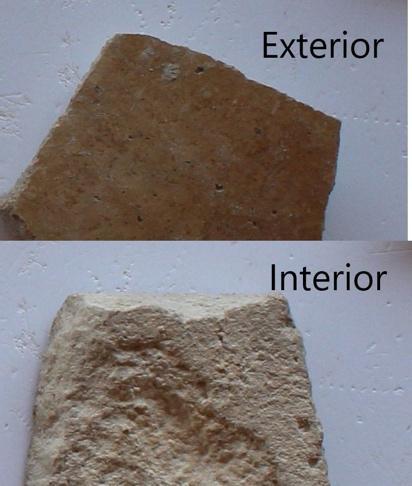
Ceramic sherds were unearthed from the Vedi Fortress Archaeological Site in 2019 from the trench N.38.478130.4419430, from 24 out of 27 contexts. These show diverse colors either formed in different firing atmospheres, by applying a slip layer on the exterior surface or due to different materials. Some ceramics were burnished to result in a smooth exterior surface compared to the rough interior surface. Given our inability to travel, we studied the sherds using photographic evidence from afar. Although this imagery examination differs from direct observation of each ceramic sherd, we can still identify distinctive fabrics.
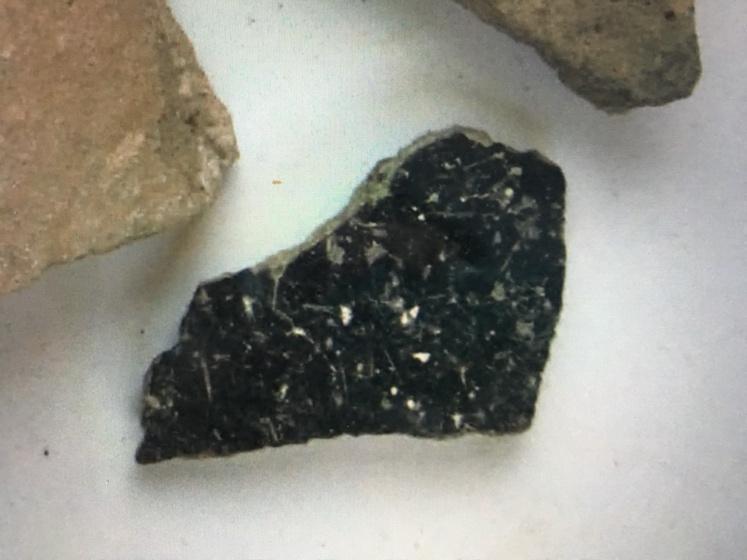
Each context contained ceramic sherds with a mixture of colors. The most diverse sherd colors exist in contexts 1, 2, 3, 8 and 9. Color shades include grey, dark/light grey, red, brick red, red brown, light brown, creamy yellow, orange, grey clay with pink slip (context 3),red clay with cream yellow slip (contexts 17,18 and 23), white and black. In some contexts, such as context 6, 10 and 16 the ceramic sherds were probably fired in a relatively low temperature since the texture of the clay is loose. It is very hard to see temper in the dark grey sherds or black sherds, probably since the temper used is also a dark color. Creamy yellow sherds are the second difficult one to detect temper in because usually the texture of such sherds is fine which means temper is also too fine to be seen from the image. The easiest sherds to see temper in are the orange-red or brick-red sherds which usually contain temper grains in a white or dark color. Black temper, fine sand temper, rough sand temper and probably rock chip temper have been primarily identified. The size of temper ranges from 1mm to 1cm.
Different types of ceramic temper have been noticed by other scholars in the archaeology of Armenia. The most common temper consists of plants and sand or a mixture of the two. Obsidian-tempered ceramics along with chaff-tempered ceramics have been found at the site of Aratashen in Armenia, dated to the Chalcolithic period, and at the Middle Bronze Age site of Geghakar in Southern Armenia by Palumbi et al (2014). Mica temper has been identified (Davis, 2012) in black sherds excavated at a fortress site dated to Late Bronze Age (1500–1150 BC) on the Tsaghkahovit Plain.
According to the above literature research, combined with what I see from a visual examination of the sherd imagery, my preliminary judgment of the usage of temper in sherds from trench N.38.478130.4419430 is that craftspeople preferred fine sand, rough sand, obsidian and rock chips. I expect to see plant temper in some of the sherds when I visit in the future.
Photos
References
Davis, N. (2012). Ancient pottery analysis: The mysterious use of mica in Armenian ceramics. Journal of Purdue Undergraduate Research, 2, 91–92. doi:10.5703/1288284314710.
Palumbi, Giulio, Gratuze, Bernard, Harutyunyan, Armine, and Chataigner, Christine. "Obsidian-tempered Pottery in the Southern Caucasus: A New Approach to Obsidian as a Ceramic-temper." Journal of Archaeological Science 44 (2014): 43-54. Web.
This page has paths:
- Armenia 2020 Peter Cobb