Digital Humanities in the Field
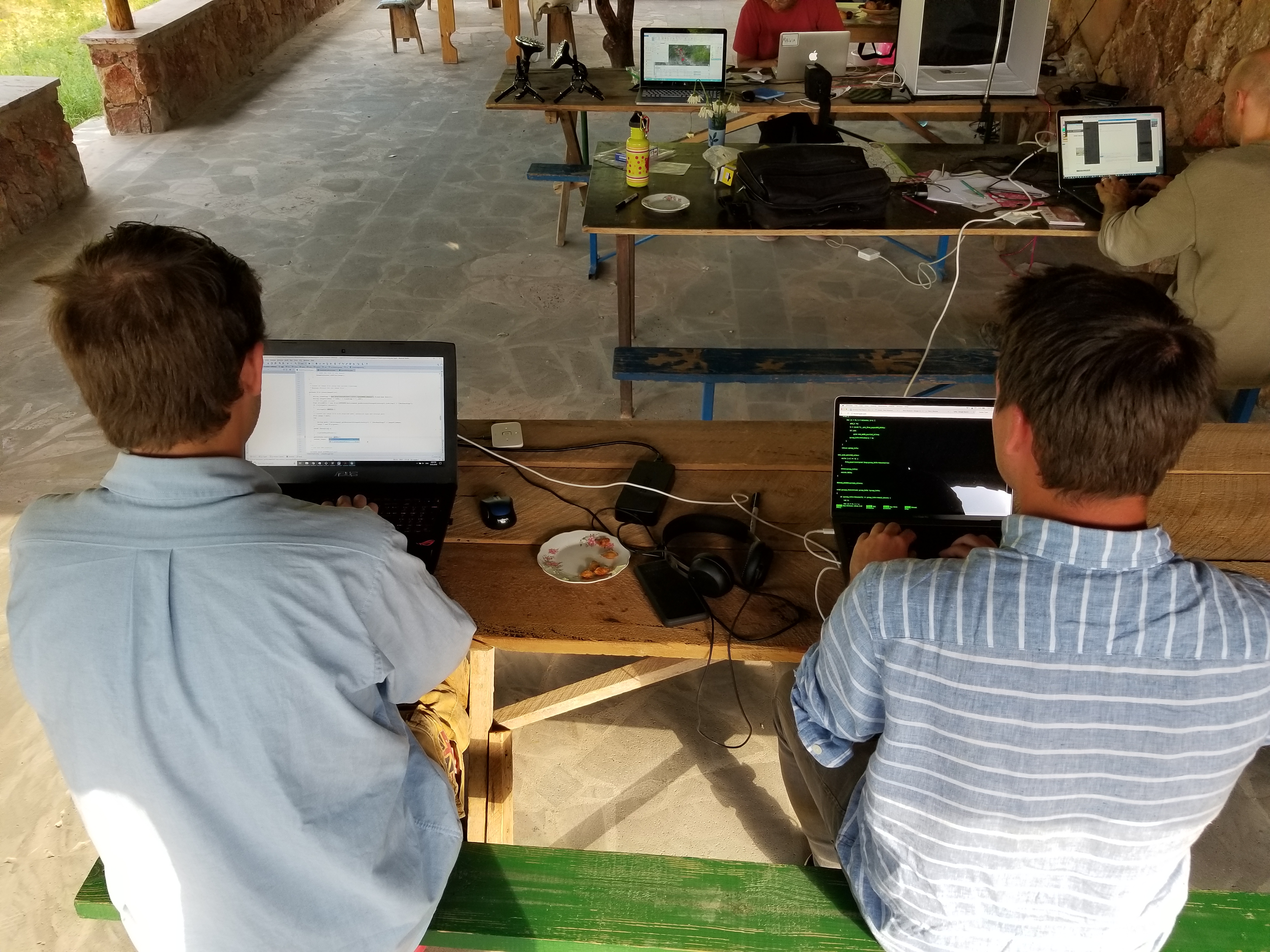 Chris and Colin hard at work
and Colin Roberts, Bachelor’s degree graduate, University of Pennsylvania
June 27, 2018
Barev! Chris and Colin here! We are both software engineering graduates working on the 2018 Open Archaeology project in Armenia, as the chief developers of several of the digital technologies in use in the field. This project has been a lot of fun! In many software projects, the developers only interact with the end users through intermediaries, be they online feedback, requirements engineers, or email. However, with this project we the developers are field testing our own apps alongside the end users. We are personally able to determine what works, what doesn’t work, what needs tweaking, and what additional features we should add. We feel this direct interaction has both facilitated faster implementations of fixes and features, as well as allowed us to grow as software developers by improving our ability to anticipate and address problems the users may face before they actually encounter them.
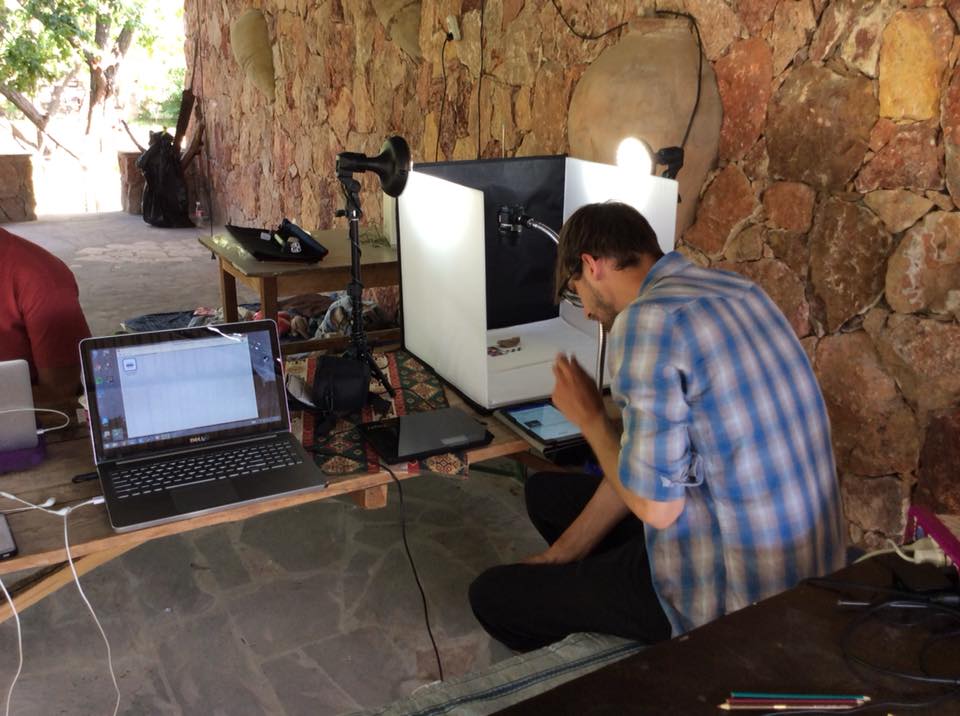 Andrew using the Data Collector app
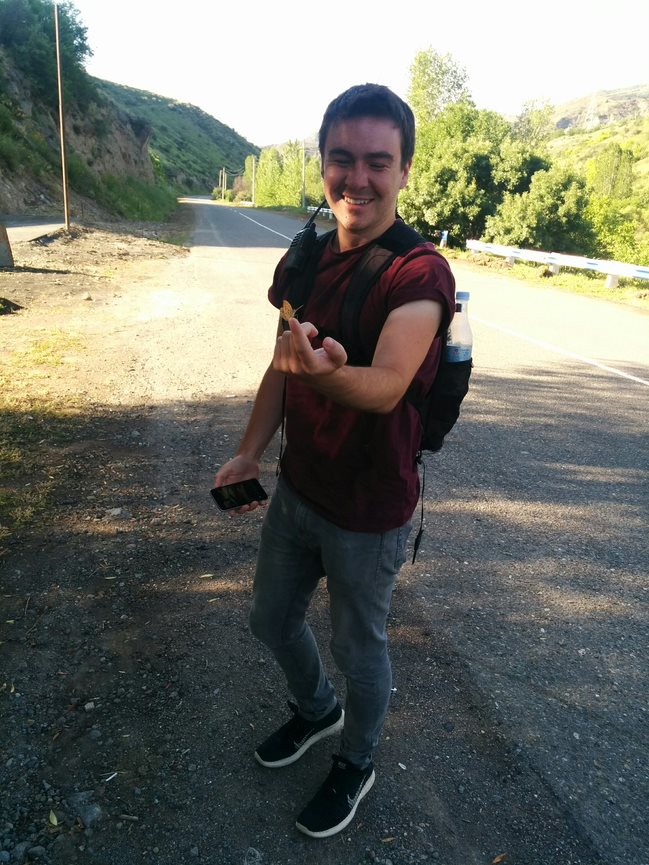 Colin taking a break from coding to enjoy nature
An additional complication we encountered with taking photos with the Sony API is that the camera captures large images of the size 8MB or larger. This requires significant resources from the Android device to download and save the image files to local storage. Generally, Android applications load thumbnail images a couple hundred KB in size, so displaying images in this manner is not normally problematic. We wanted to make sure we were working with the full images rather than thumbnails, so we had to carefully manage Android resources. While Java usually handles memory allocation and recycling automatically through the garbage collector, we needed to manually allocate and free memory like we were writing in a lower level language like C or C++.
Challenges aside, we developers were incredibly lucky to be working on such a cool project. Nothing beats looking out at the beautiful mountains of Armenia or eating fresh-off-the-tree apricots as we work. I’m incredibly thankful to Price Lab, the Penn Museum, and all of its donors for making this trip possible, as well as the University of Pennsylvania, Dr. Cobb, and The Armenian Institute of Archaeology for their help with lodging, travel, and other assistance. Last but not least, we would like to thank our friend and translator Hayk jan for his help in the field and for helping us make the most of our Armenian journey.
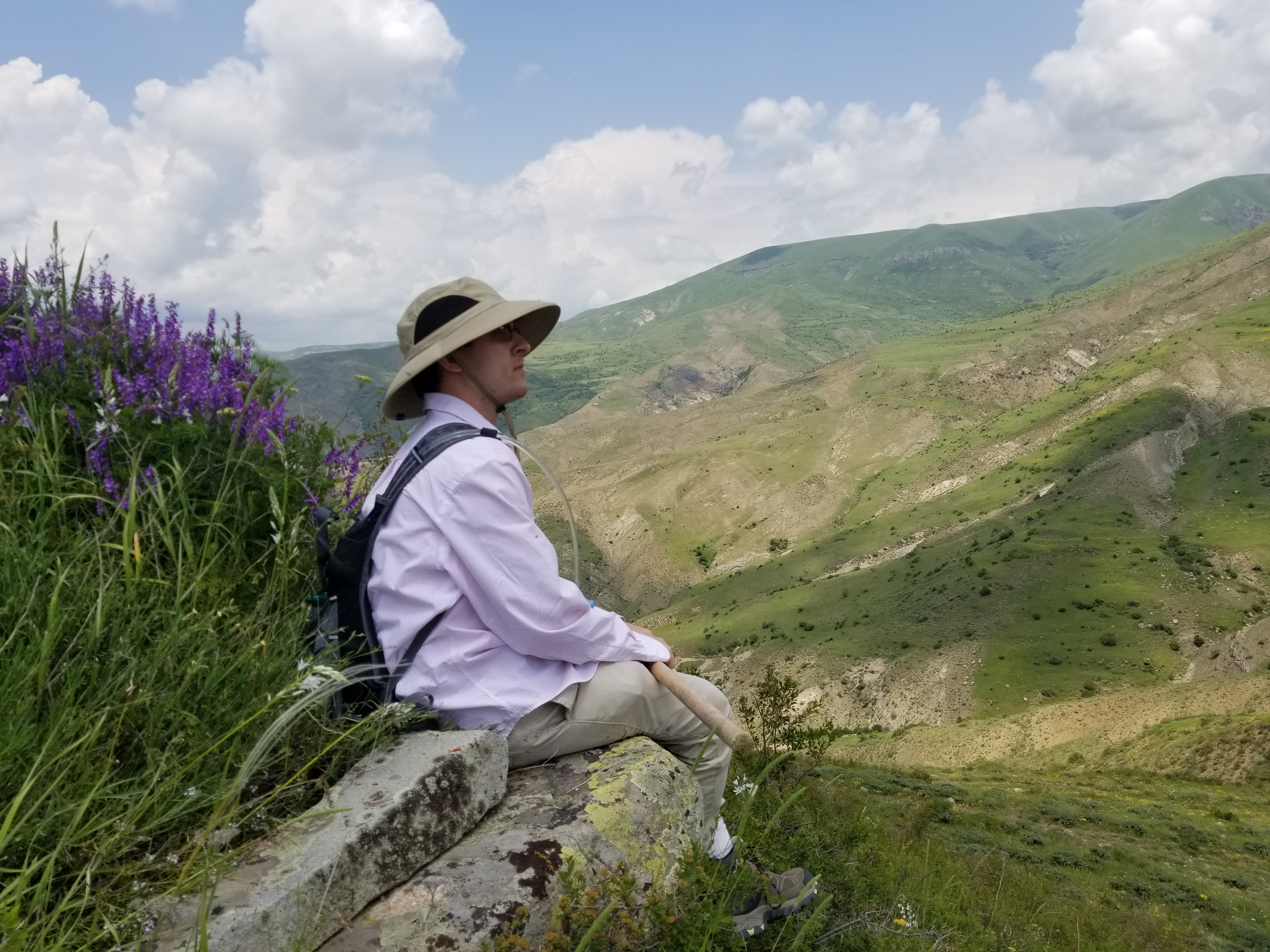 Chris reflecting on his time at Armenia
Links to the project code repositories:
This page has paths:
- 2018 Fieldwork in Armenia Peter Cobb